Artful Joinery

By 2026, current classes

Artful Joinery

with Rob Spiece

September 14 - 19, 2026

$1,900

Artful Joinery

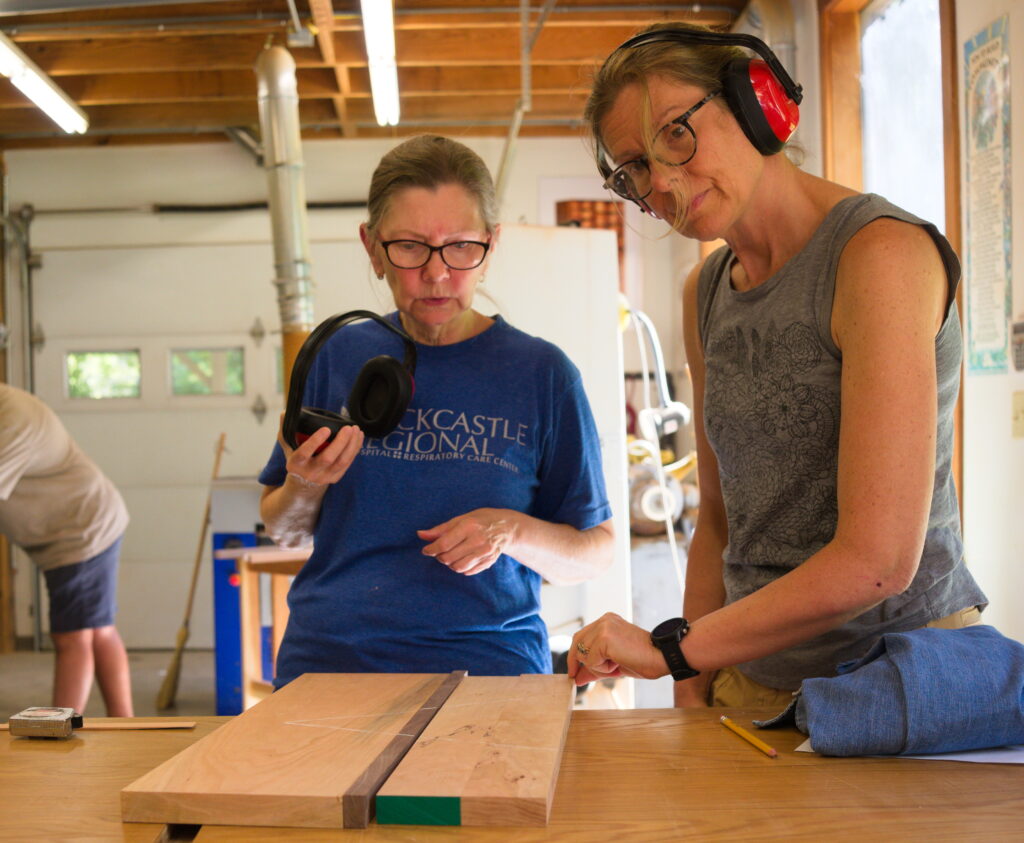
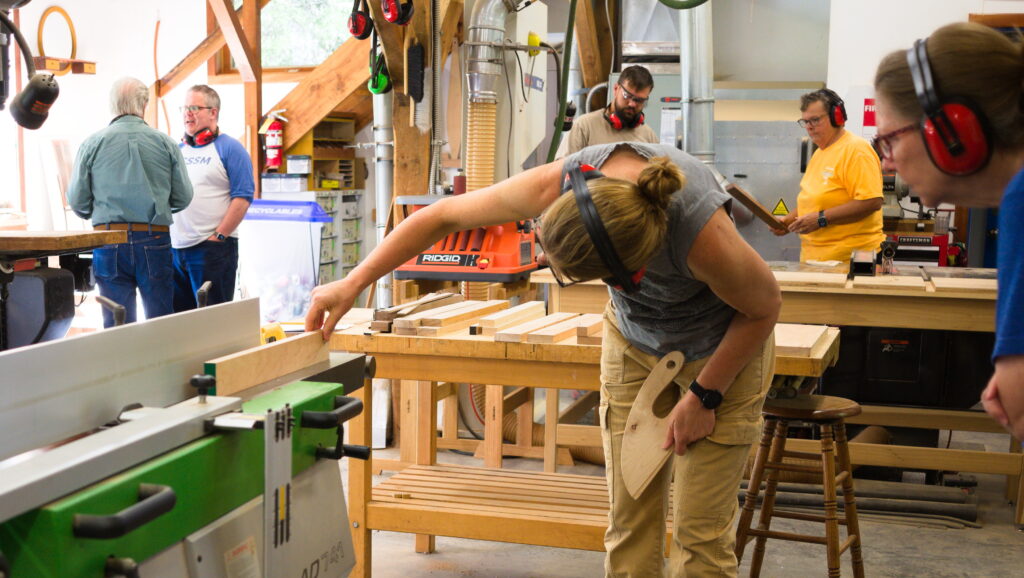
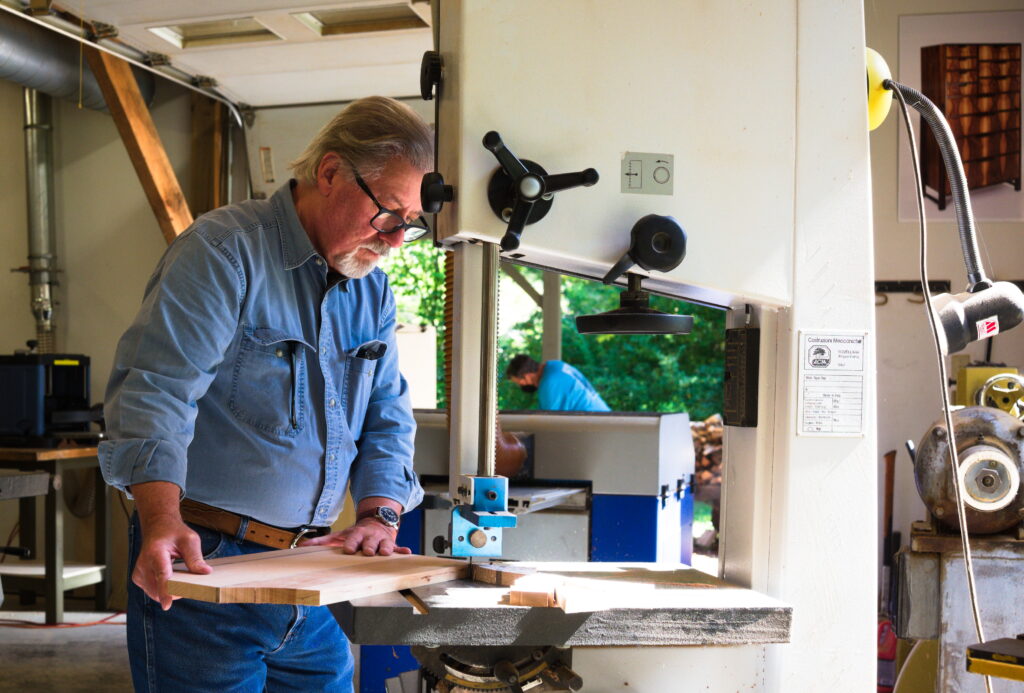
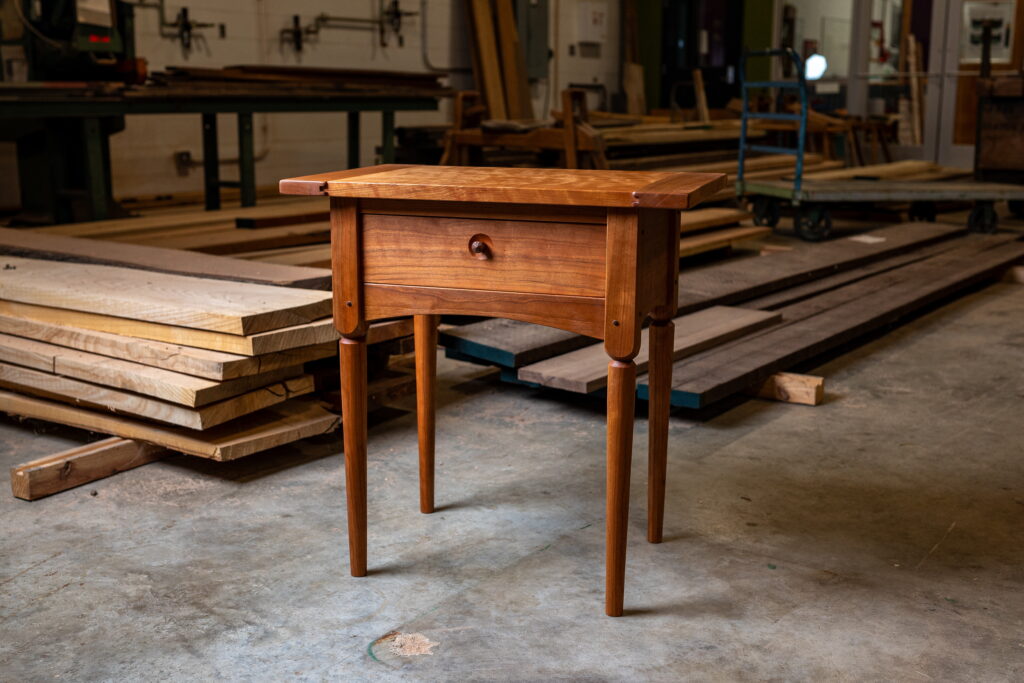
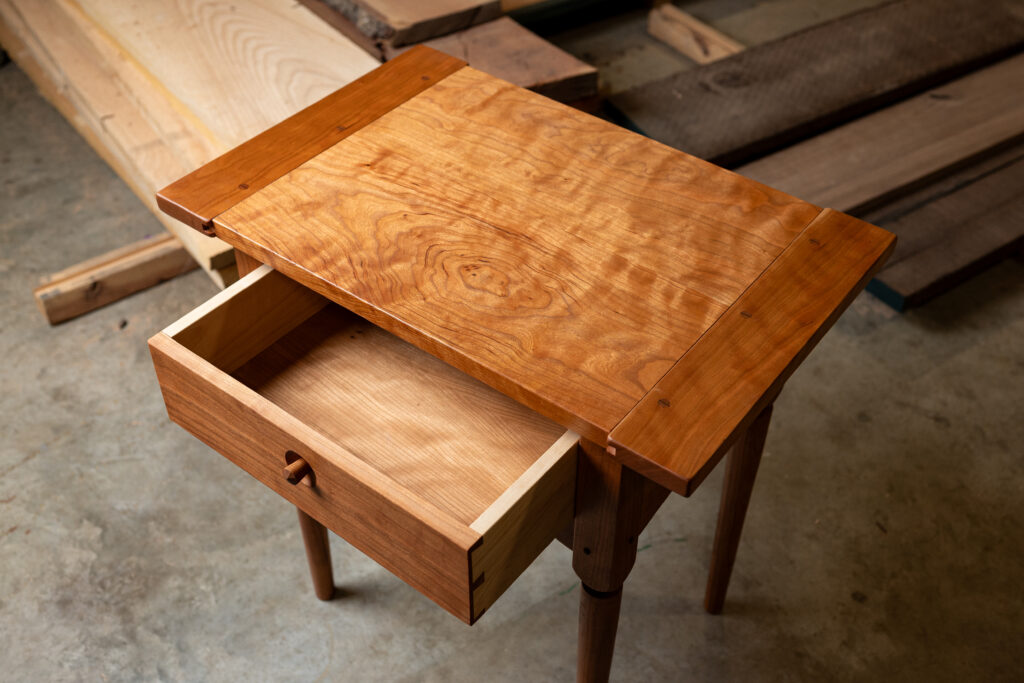
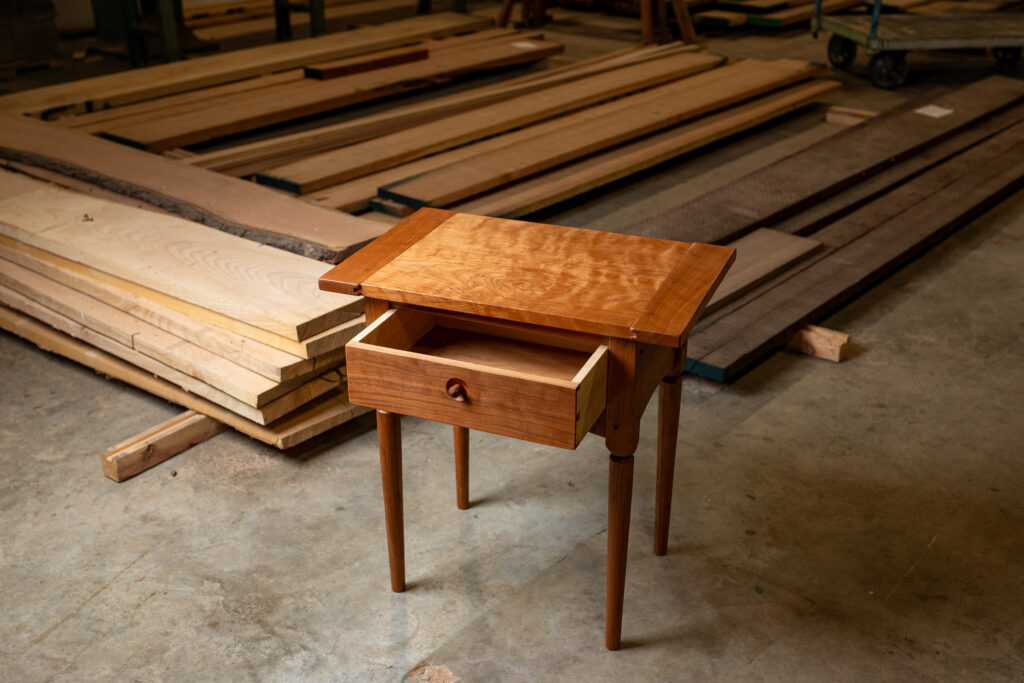
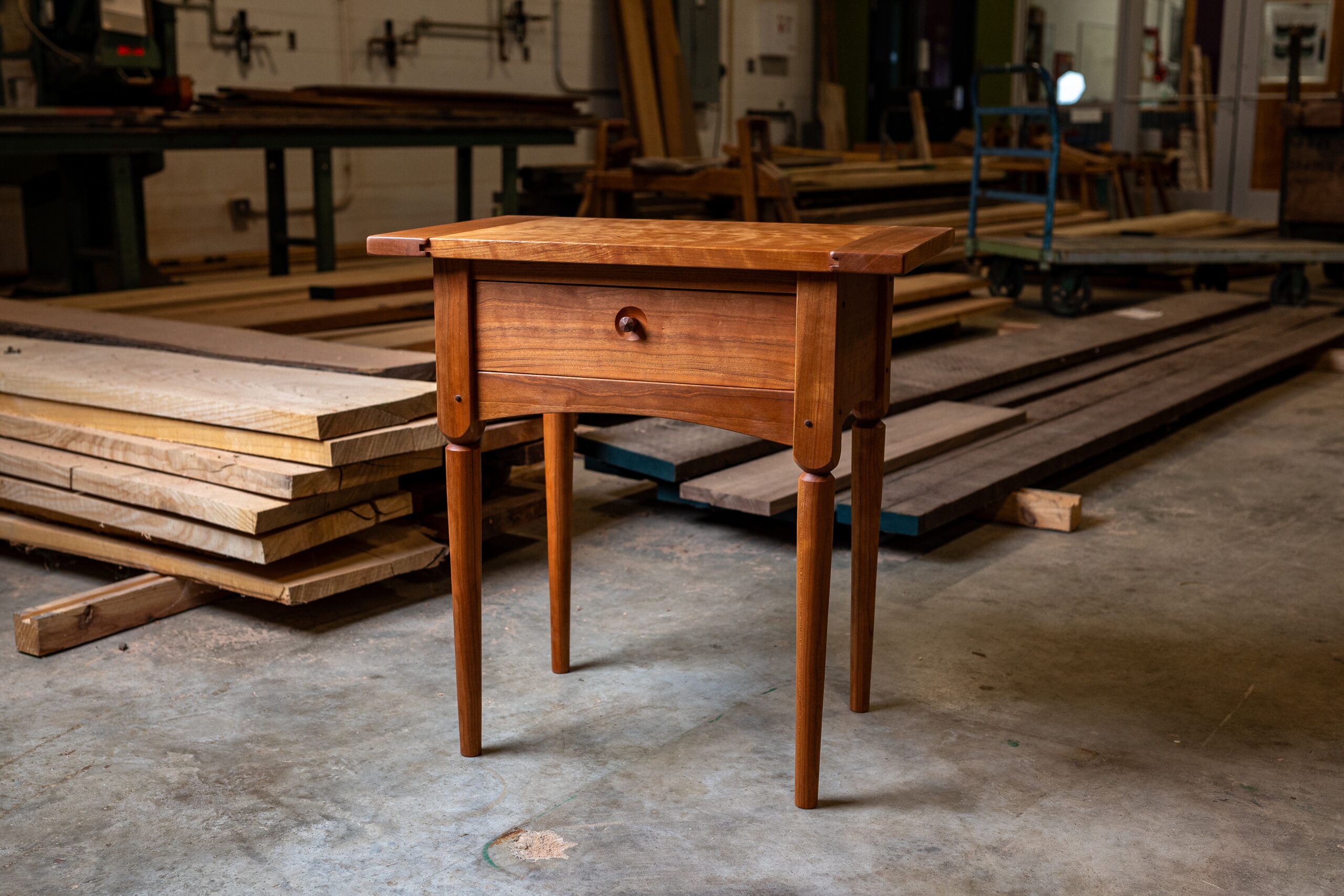
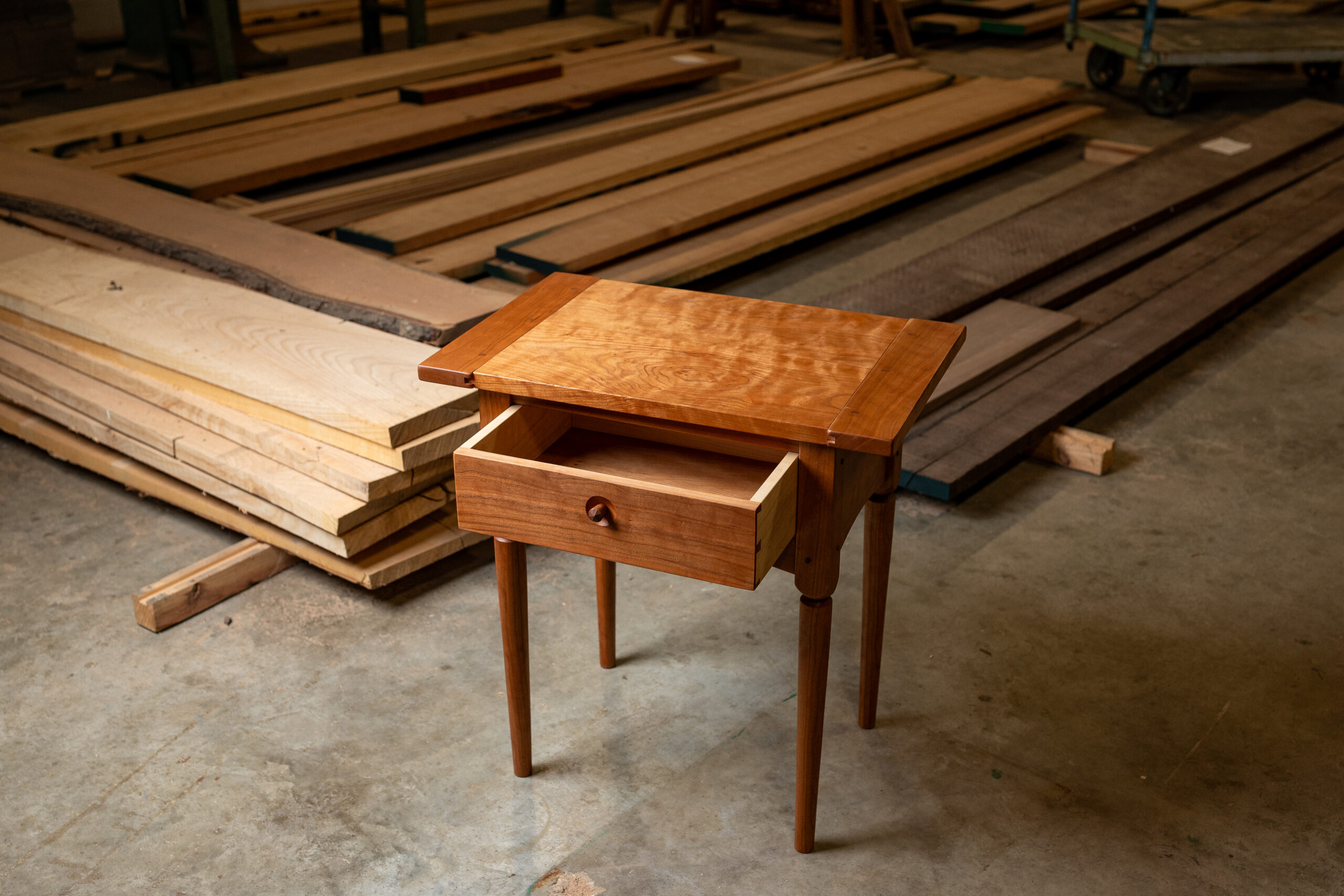
Building on the techniques we learned in Foundations of Furniture Making, this class will explore delicate and exacting joinery while building a carefully proportioned side table.  The details in this piece highlight the maker’s hand at every corner. Continued below…

Class Description:

Building on the techniques we learned in Foundations of Furniture Making, this class will explore delicate and exacting joinery while building a carefully proportioned side table.  The details in this piece highlight the makers hand at every corner.

So many dovetails…

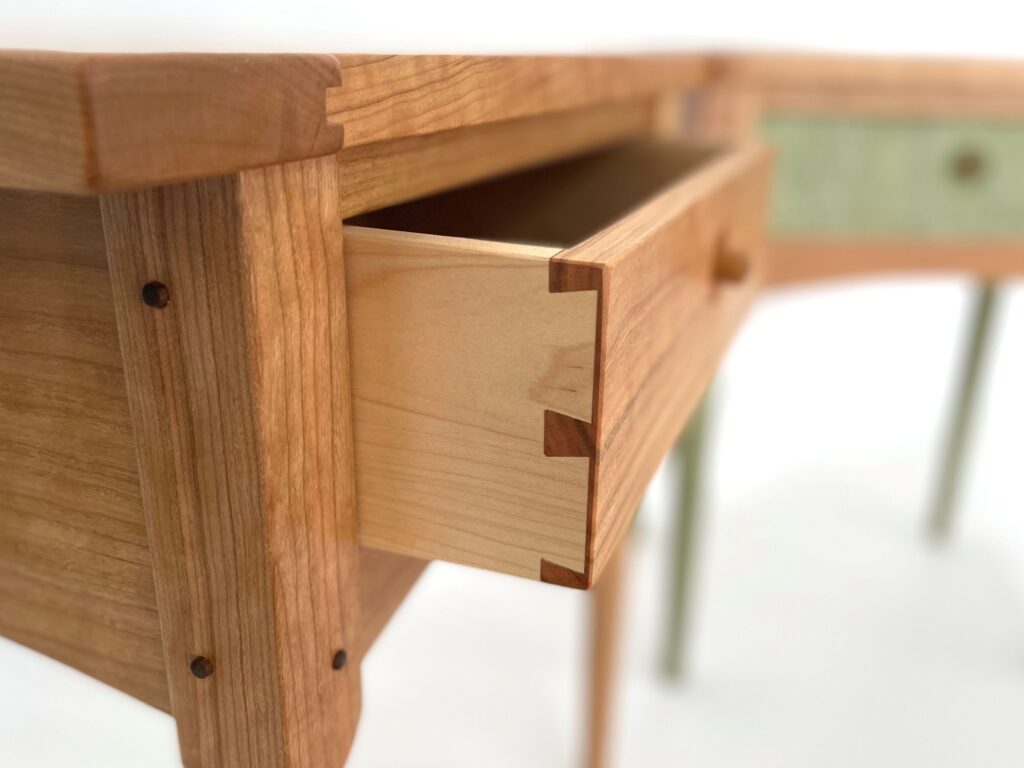
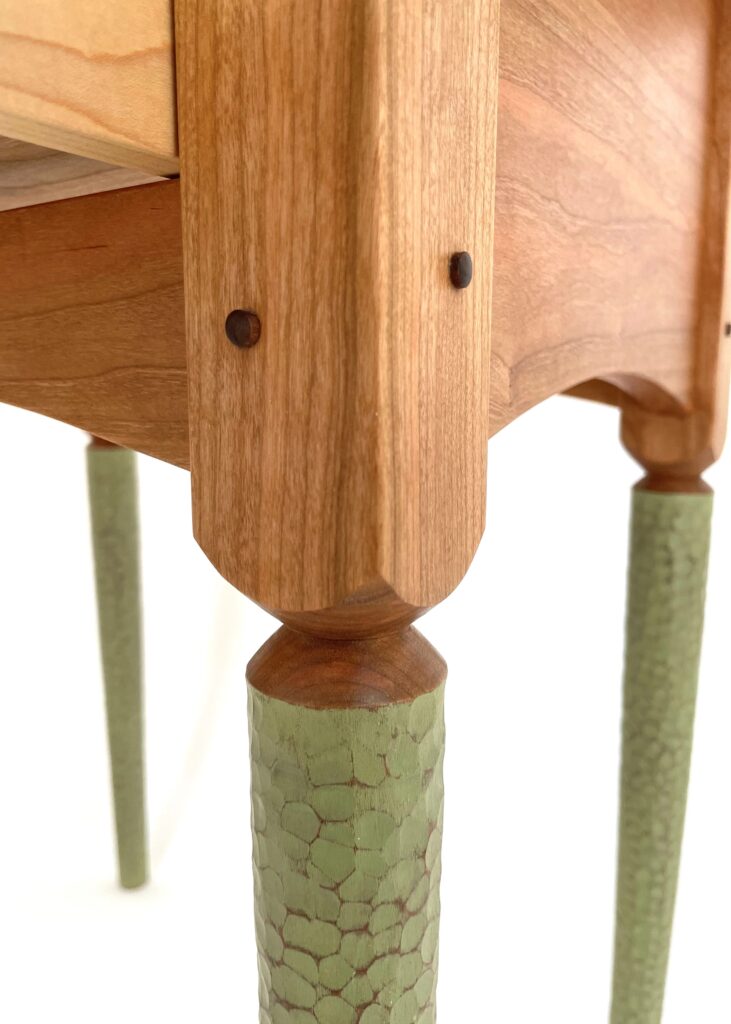
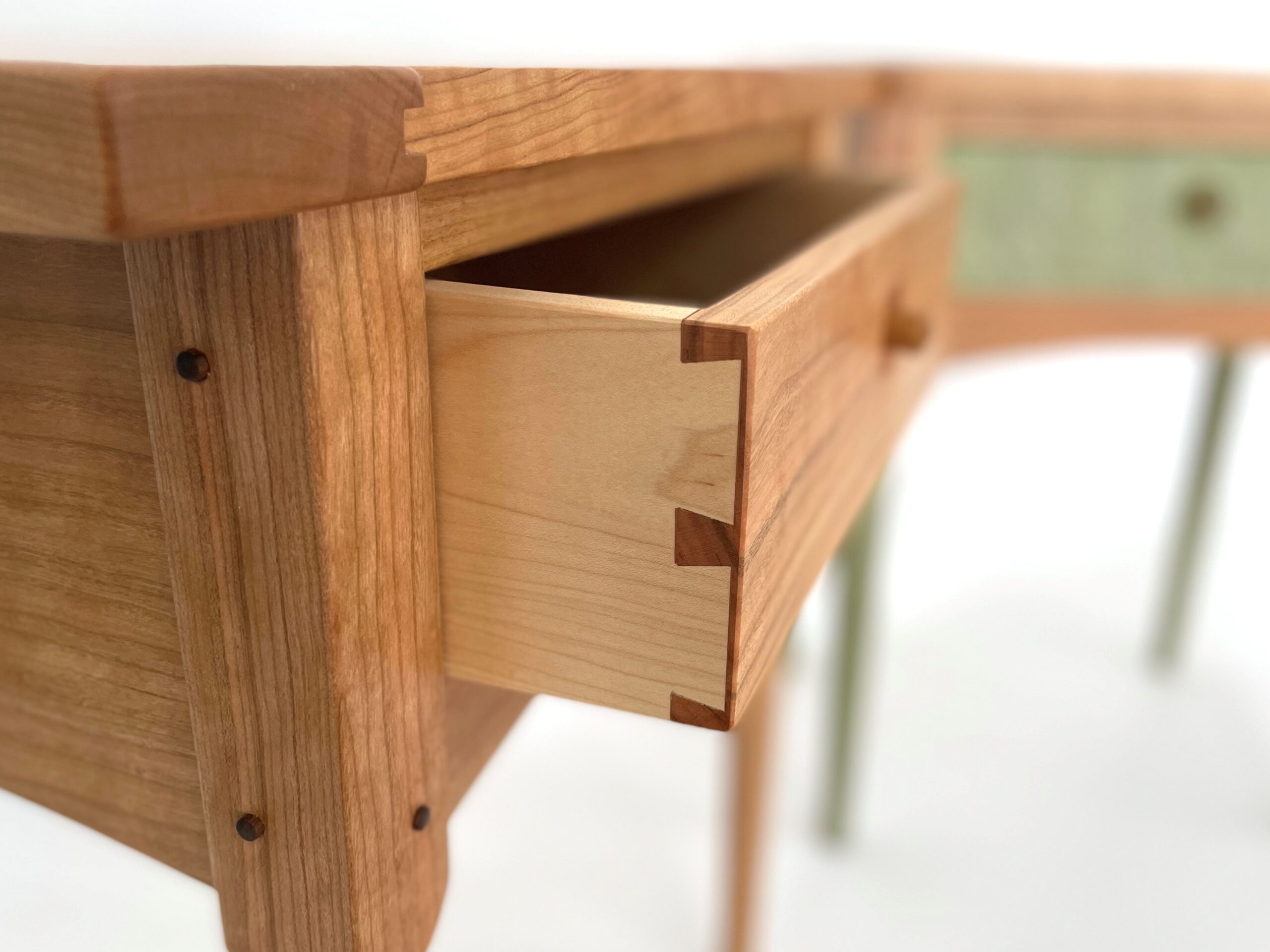
Dovetails are all over this piece – from the socket dovetail that joins the legs above the drawer, to the through dovetails at the drawer back and the half blind dovetails at the drawer front.  There are so many ways to cut this joint and we’ll look at them all.  One method doesn’t work for everyone, so I’ll encourage you to look for ways that makes sense to your hands, your head and the tooling you have available.

Engineering with wood…

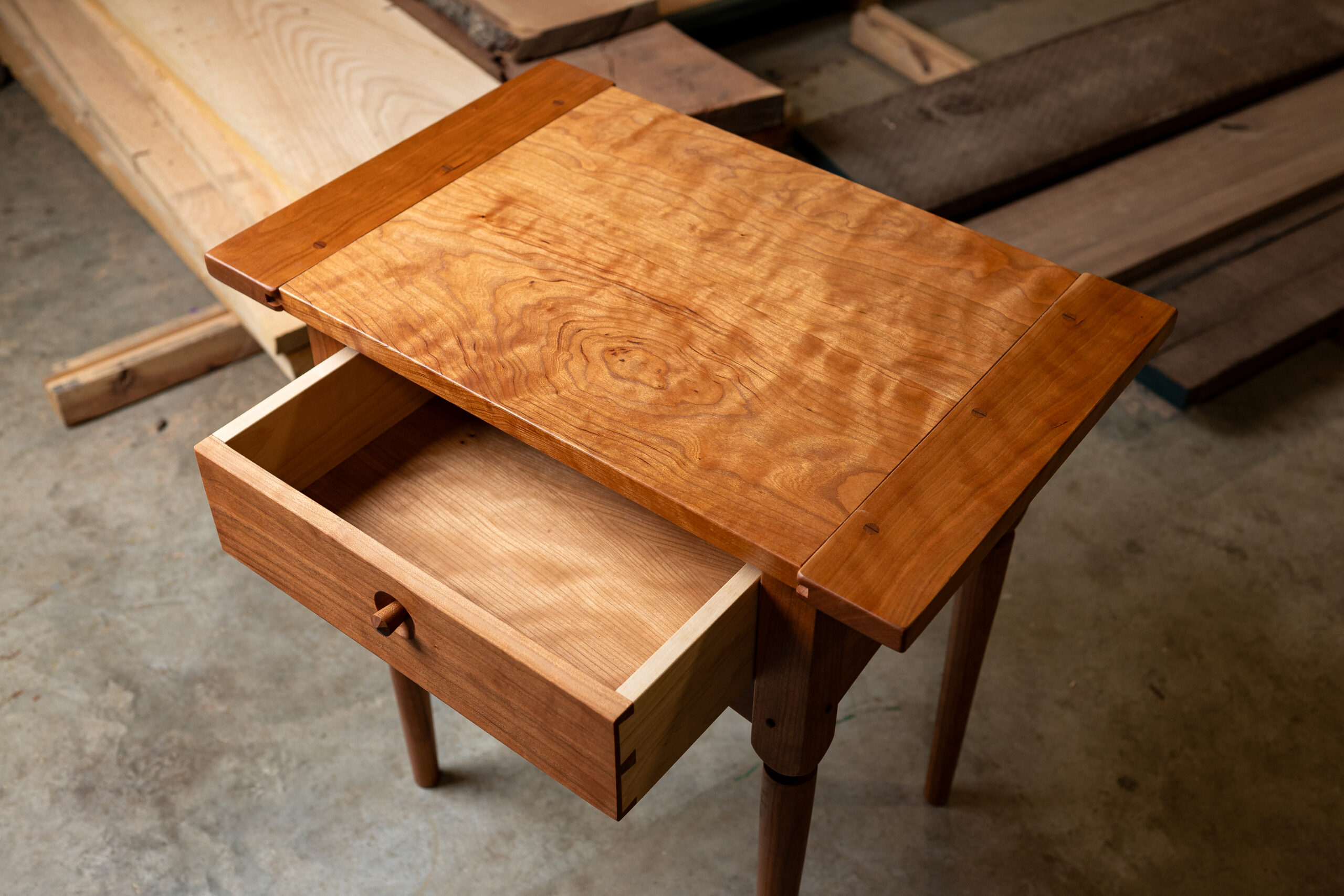
One of my favorite joints – the breadboard end – tells a story of craftsmanship and consideration.  Tenons cut on the table top join to breadboards with pins and wedges.  The joint is engineered to hold tight and allow movement at the same time.  Glue is used sparingly in assembly and the draw bored pins do the heavy lifting.

Fitting Drawers

Cutting fine dovetails is great, but you need a place for them to go.  There’s nothing better than a finely fitted drawer that runs on wood runners.  We’ll dive into a traditional approach to fitting a drawer that leads to silky smooth operation, no matter the time of year.

Shaker Style

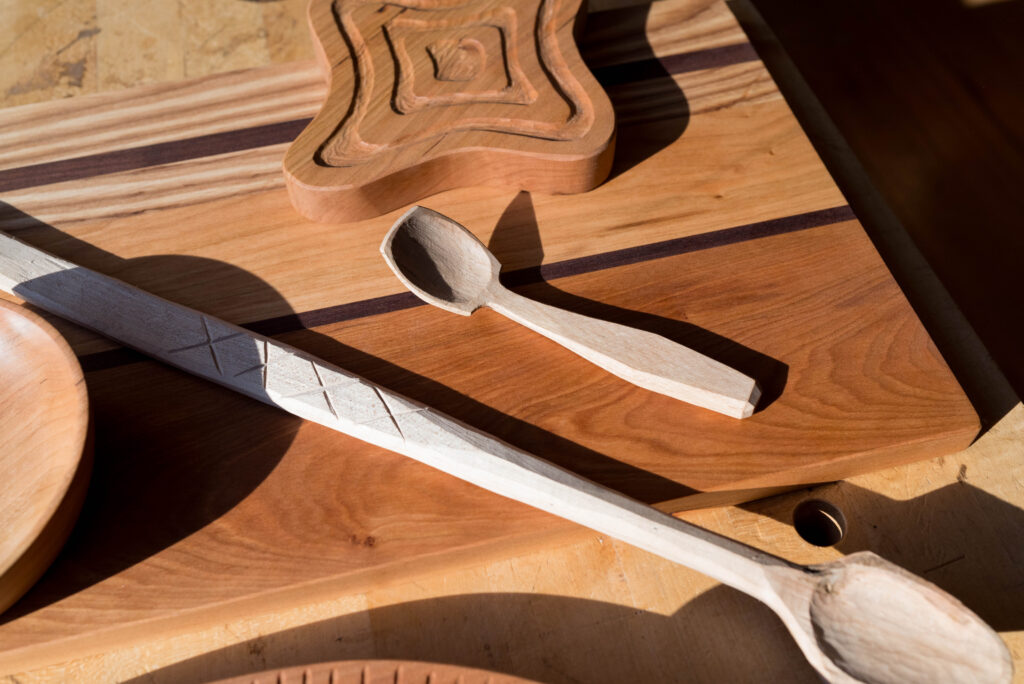
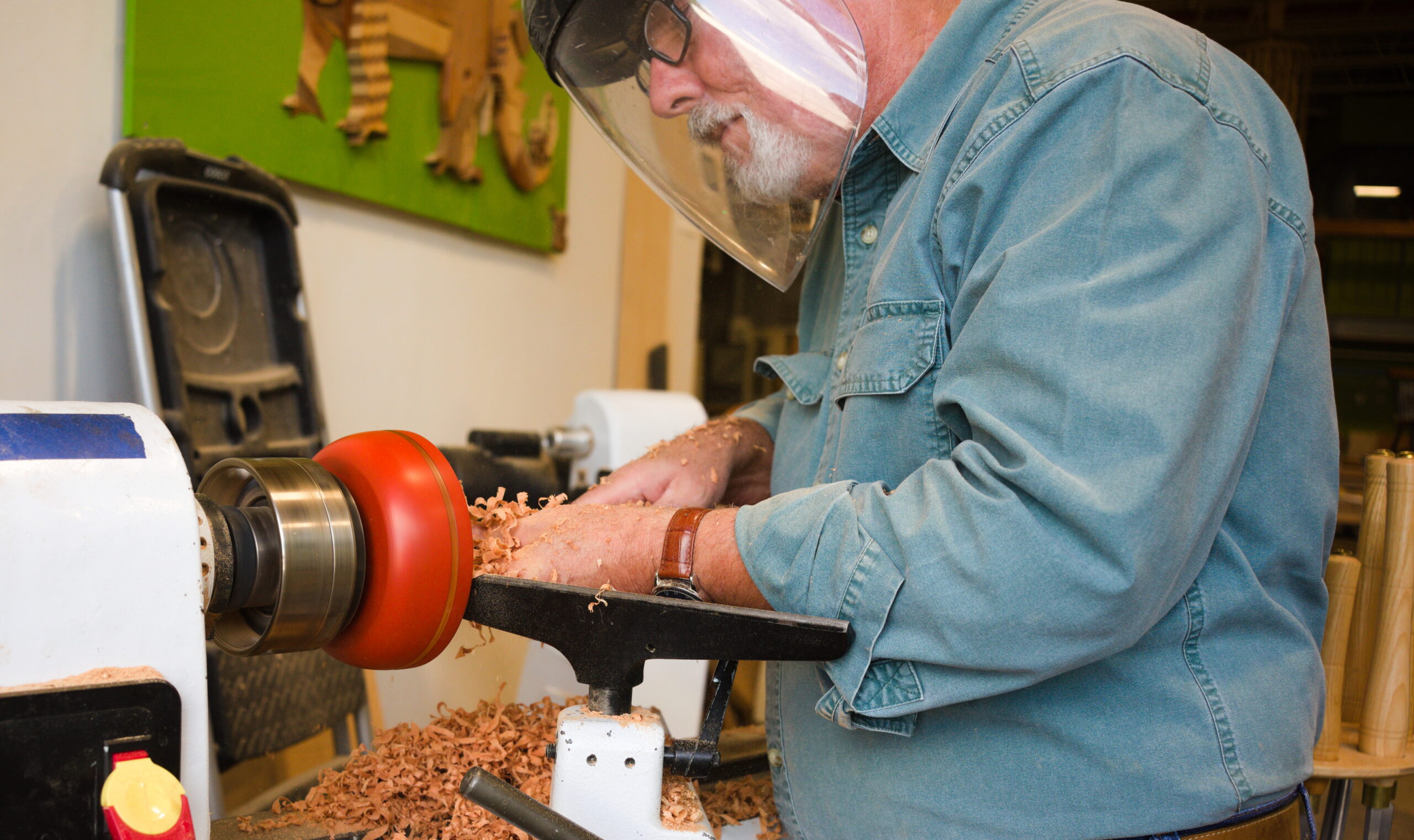
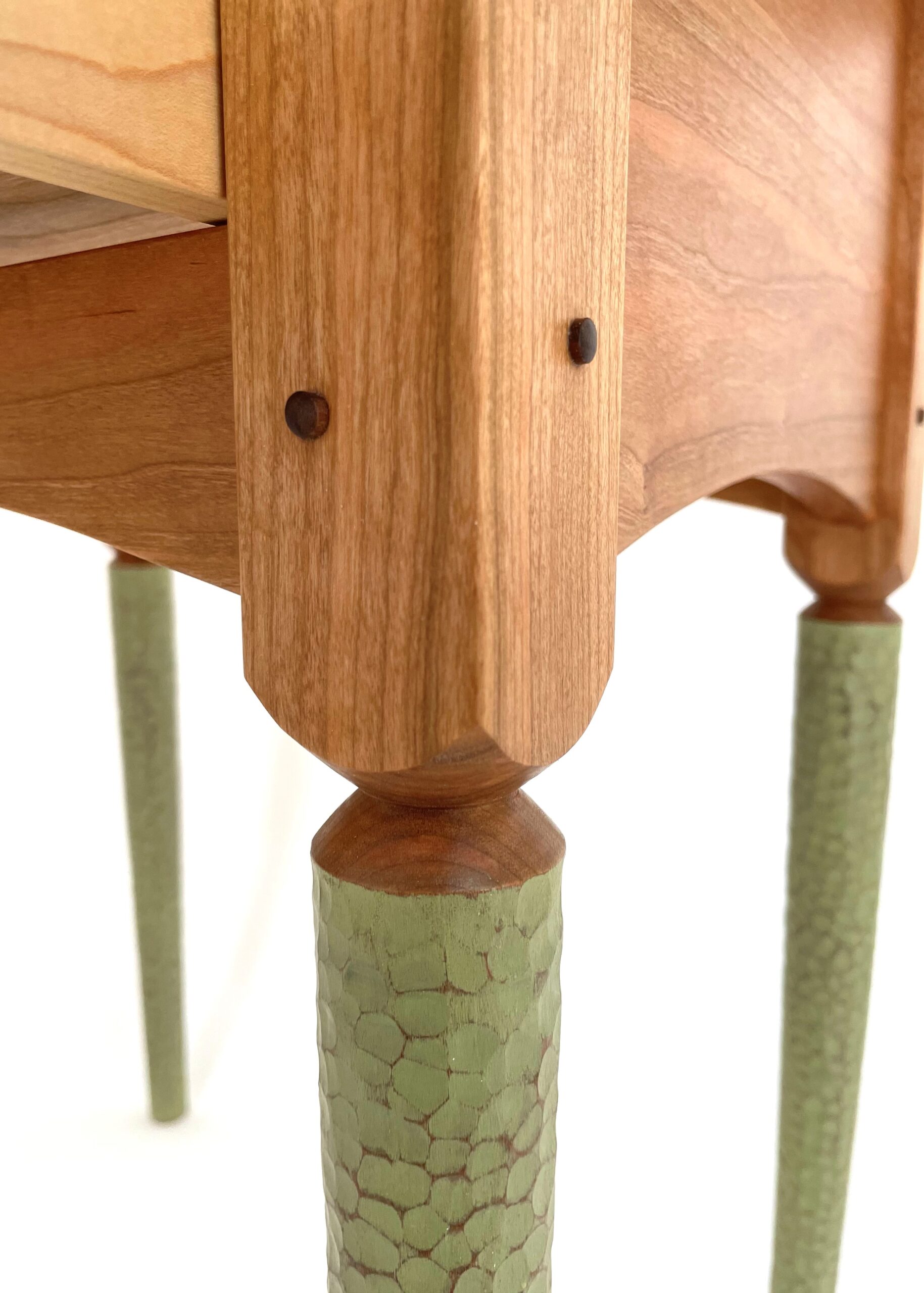
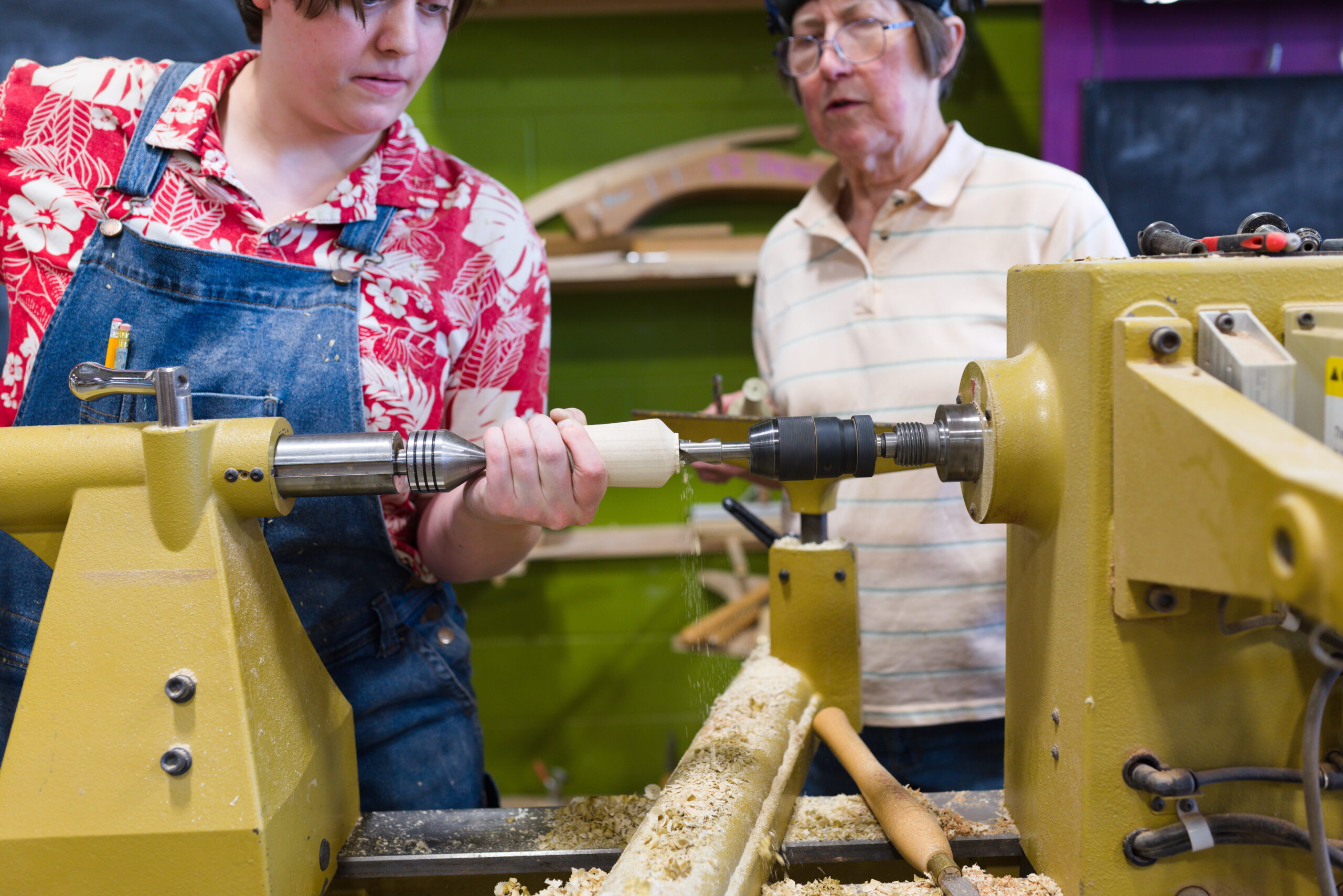
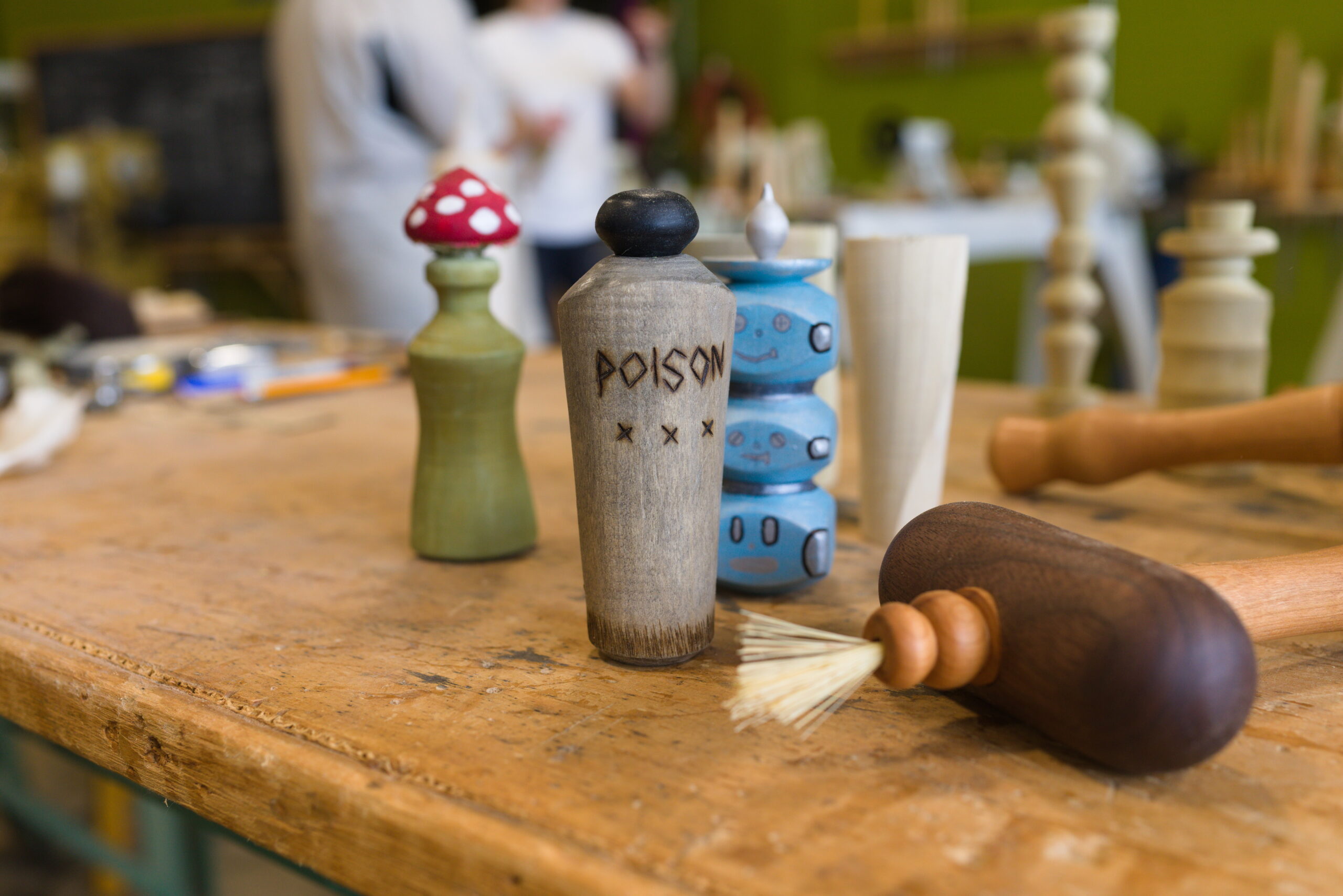
Drawing from examples of Shaker pieces, turned and tapered legs give us a chance to explore turning furniture parts.  Transitions from square to round take a bit of practice, so we’ll spend a day at the lathe tuning in our finished cuts.  Delicately turned pulls give us a chance to shape graceful small parts.

(photos: turning square to round transition, turning pulls, tapping in pegs)


Prerequisite:  I’d highly encourage taking my Foundations of Furniture Making course before this one.  In that class, we really have time to dive into knowledge of wood as a building material – and the exacting methods of building fine furniture.  The ability to make a mortise and tenon joint and accomplish exacting layout is essential to your success in this class.  A basic comfort level with the tablesaw, bandsaw and router are essential. Coming into this higher level class without a solid background in the fundamentals of woodworking may lead to a difficult experience.


Required Tools:

Dovetail Saw

Marking Gauge

Combination square

Mallet

Basic set of chisels (3/8”, ½”, ¾”)

Layout knife

Rabbet block plane or shoulder plane

Card Scraper


Additional tools – not necessary, but if you have a favorite:

Block plane

Cordless drill

Hammer – for tapping in pins

Turning tools – Spindle roughing gouge, skew chisel, beading and parting tool

Material costs and daily  lunches are always included in the course fee at Pine Croft.

Intro to Bowl Turning

By 2026, current classes

Foundations of Bowl Turning

with Matt Monaco

March 2 - 6, 2026

$1200

Intro to Bowl Turning

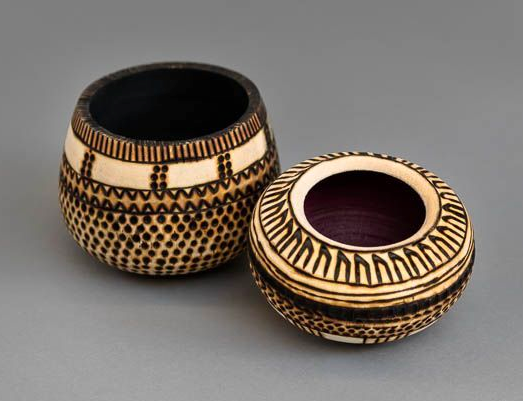
Understanding & Developing tool control & core principles of turning wood effectively. In this course, students will learn both foundational & following stages in developing, and practicing fine technique, finesse & tool control, while exploring how to be made applicable in creating well-designed, and proportioned vessels, from outflowing open, and enclosed form bowls, to fine platters. Continued below…

Class Description:

In this course, students will learn both foundational & following stages in developing, and practicing fine technique, finesse & tool control, while exploring how to be made applicable in creating well-designed, and proportioned vessels, from outflowing open, and enclosed form bowls, to fine platters.

Matt will introduce you to some of his most effective approaches in turning side grain vessels.

–Based on his formative years training & spent as a working professional trade woodturner, and will aid in helping you to realize and develop a design aesthetic and approach for you to begin creating your best work with the advantage of using traditional woodturning tools.

—Learn How the process of acquiring the skill of advanced tool usage, and developing an eye for form, naturally leads to better results in the making process for the longer term; such as cutting cleaner surfaces.

— Learn to understand how particular body ergonomics can greatly affect the creation of high quality work on the lathe.

— Learn to create a range of traditional & contemporary forms and items based on Matt’s years working as an in-house trade woodturner, in the high-end furniture trades of Shackleton Thomas Furniture.

—Learn directly from a professional woodturner who has 20 year experience in both the wholesale tradeshow, and retail & interior design market industry

The costs of material and daily lunches are included in the course fee of every class at Pine Croft.

Learn To Turn with Beth Ireland

By 2026, current classes

Learn To Turn

with Beth Ireland

July 13 - 17, 2026

$1,200

Learn To Turn

This course gives novices a strong foundation of techniques for spindle, end grain, and faceplate turning. Starting with the essentials of sharpening, Beth teaches participants to work safely and effectively with standard turning tools such as spindle and bowl gouges, scrapers, and parting tools. She also shares methods for making custom tools to achieve professional-quality results.

Participants begin with spindle turning and progress through a series of exercises to learn sizing, fitting, hollow work, and bowl turning. Instruction covers everything from wood selection to finishing, as students create a series of projects. Beth discusses problem solving and the development of a personal turning style. Continued below…

Class Description:

This course gives novices a strong foundation of techniques for spindle, end grain, and faceplate turning. Starting with the essentials of sharpening, Beth teaches participants to work safely and effectively with standard turning tools such as spindle and bowl gouges, scrapers, and parting tools. She also shares methods for making custom tools to achieve professional-quality results.

Participants begin with spindle turning and progress through a series of exercises to learn sizing, fitting, hollow work, and bowl turning. Instruction covers everything from wood selection to finishing, as students create a series of projects. Beth discusses problem solving and the development of a personal turning style.

All lunches are provided at Pine Croft.

Class: Harvesting Hickory Bark

By 2026, current classes

Hickory Bark Harvesting

May 30, 2026

$195

Hickory Bark Harvesting

In this one-day class, we will harvest hickory bark from the Berea College forest.  Weather permitting, we’ll start the day with a visit to the woods to discuss good bark trees and safety considerations.  Then we’ll head back to the shop, where we’ll shave bark from a collection of hickory saplings. Continued below…

Email bisterk1@berea.edu to join the waitlist!

Class Description:

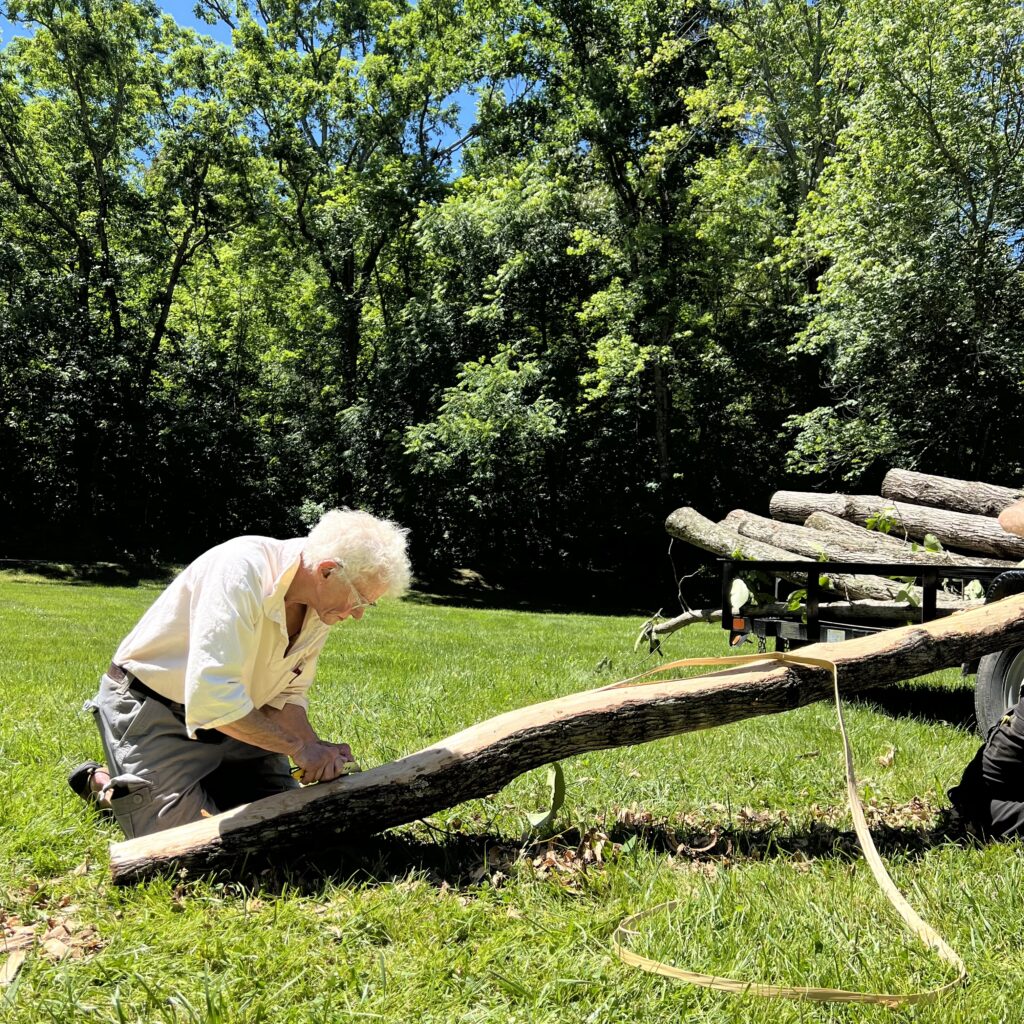
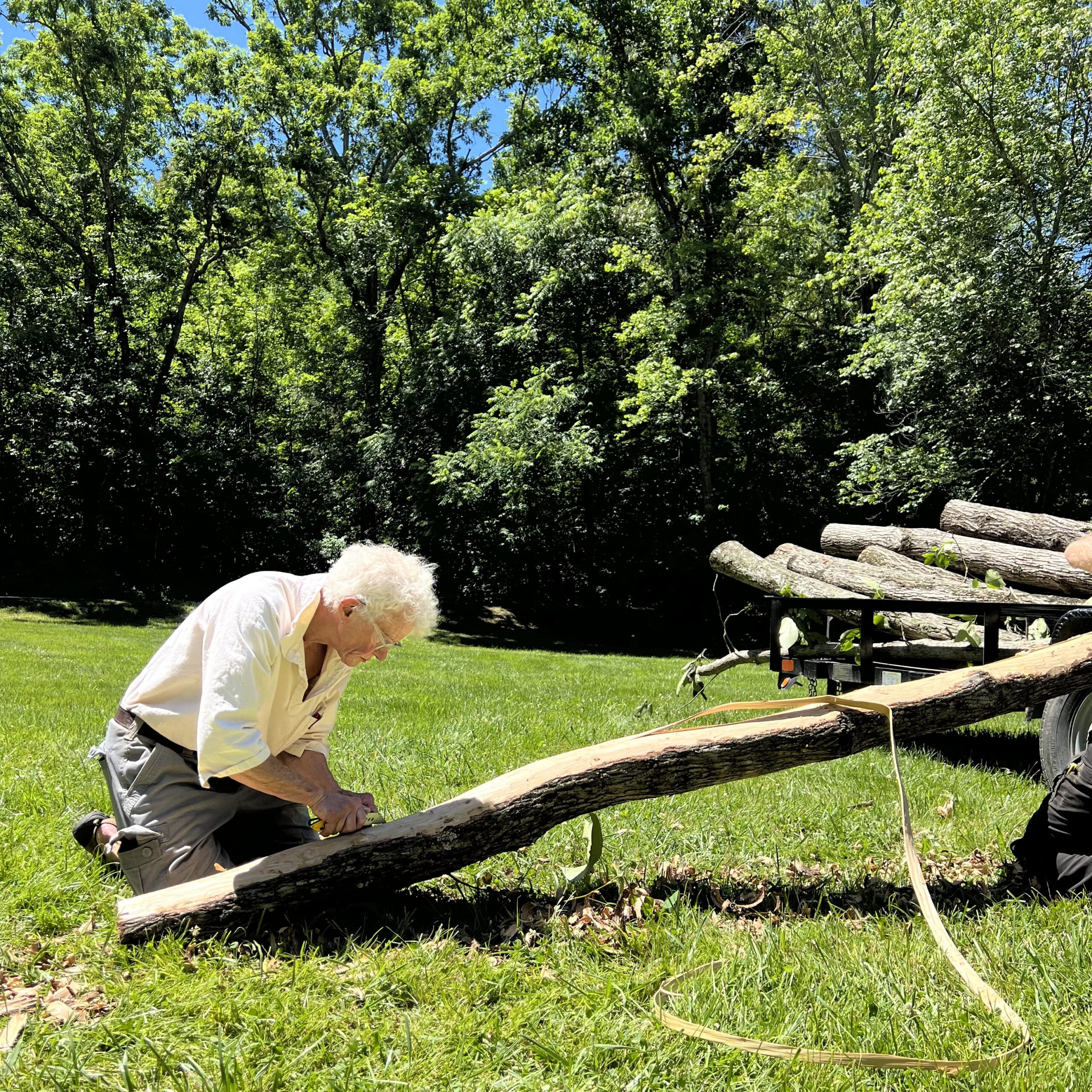
In this one-day class, we will harvest hickory bark from the Berea College forest.  Weather permitting, we’ll start the day with a visit to the woods to discuss good bark trees and safety considerations.  Then we’ll head back to the shop, where we’ll shave bark from a collection of hickory saplings.  
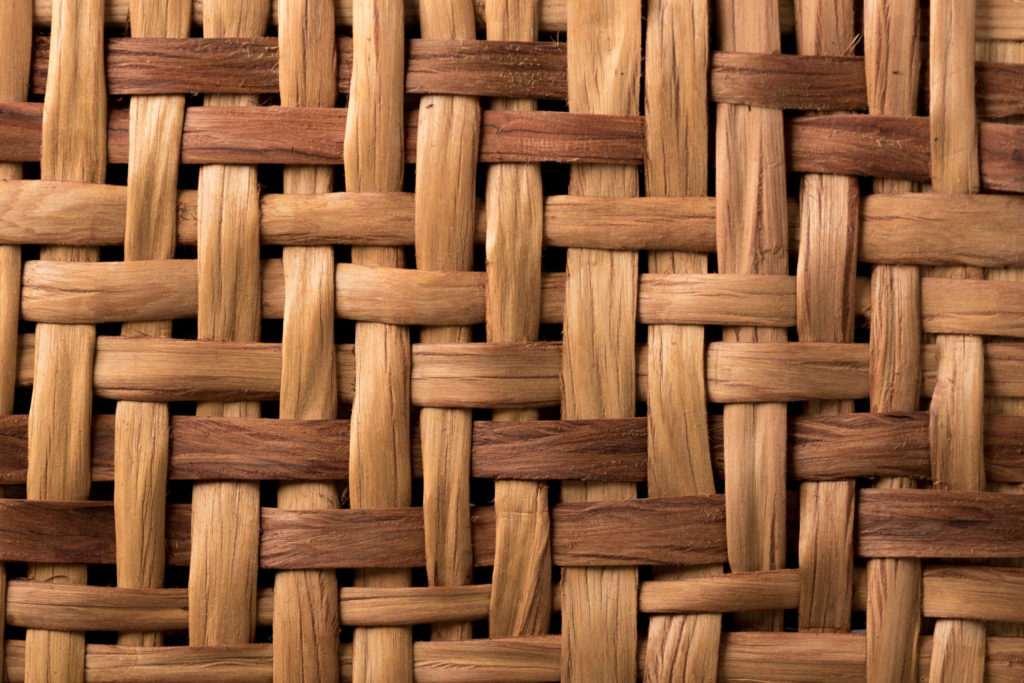
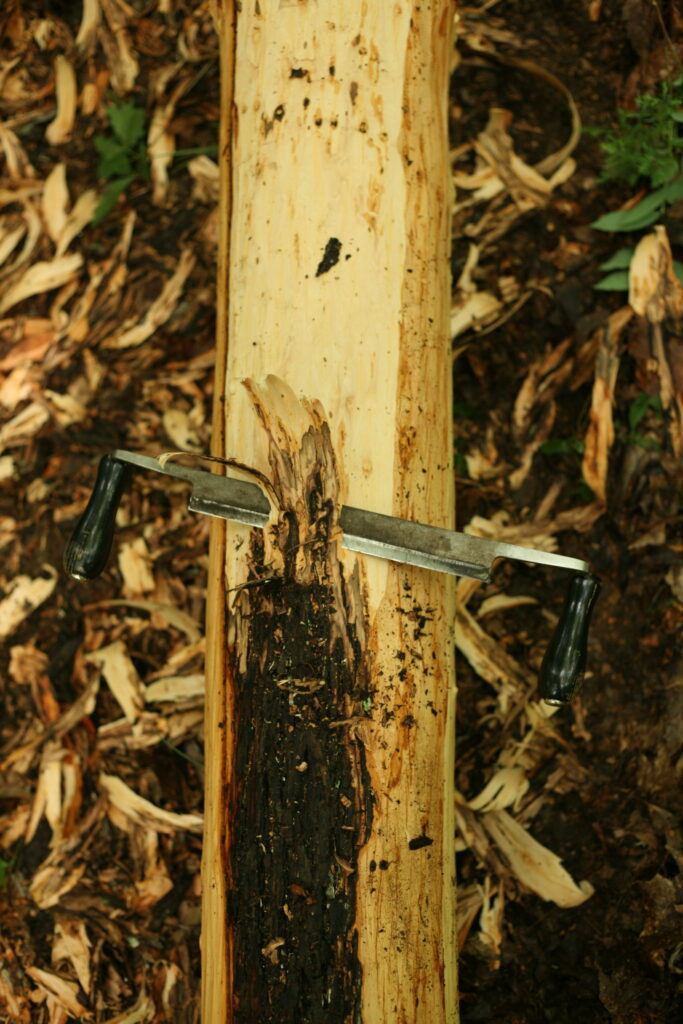
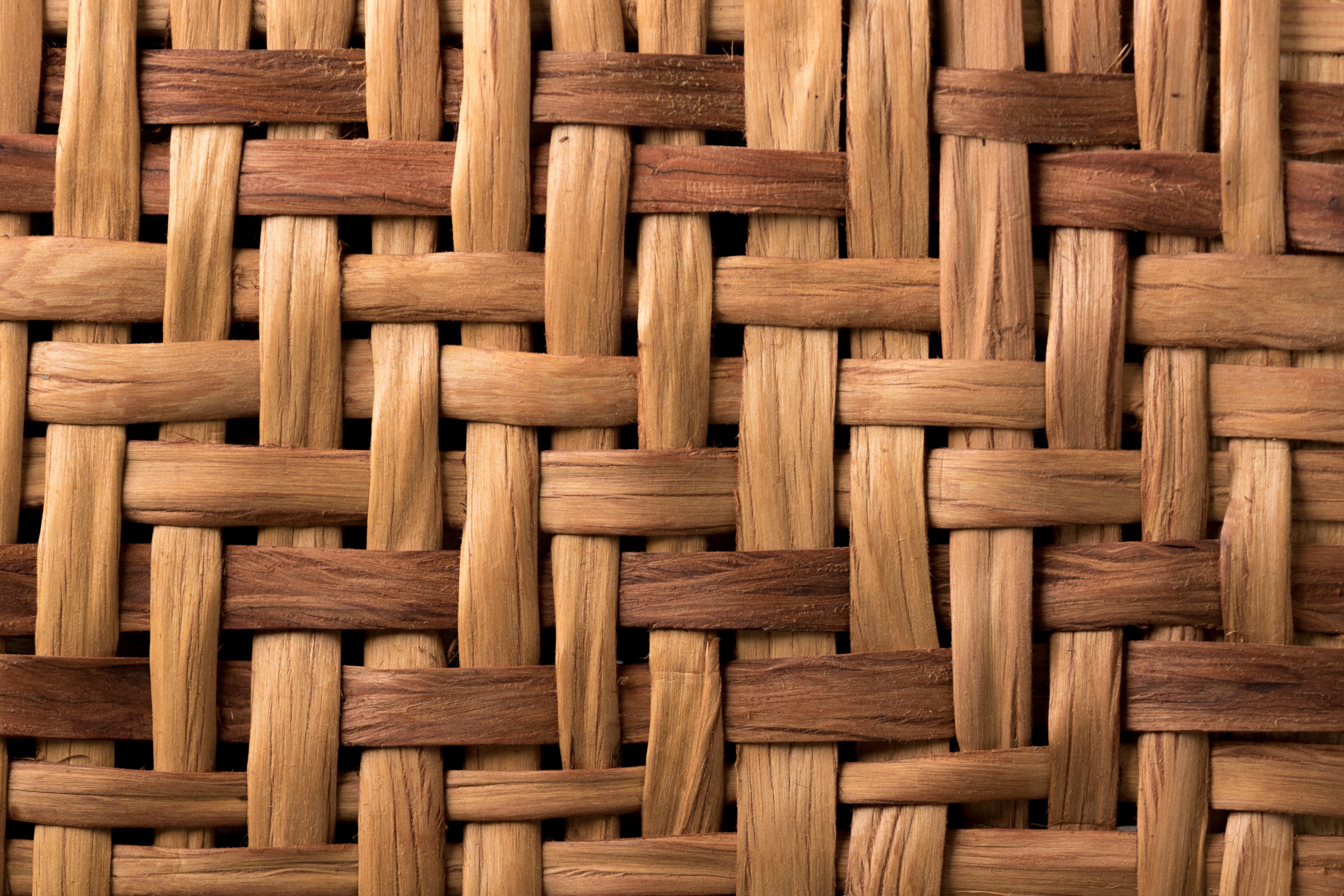
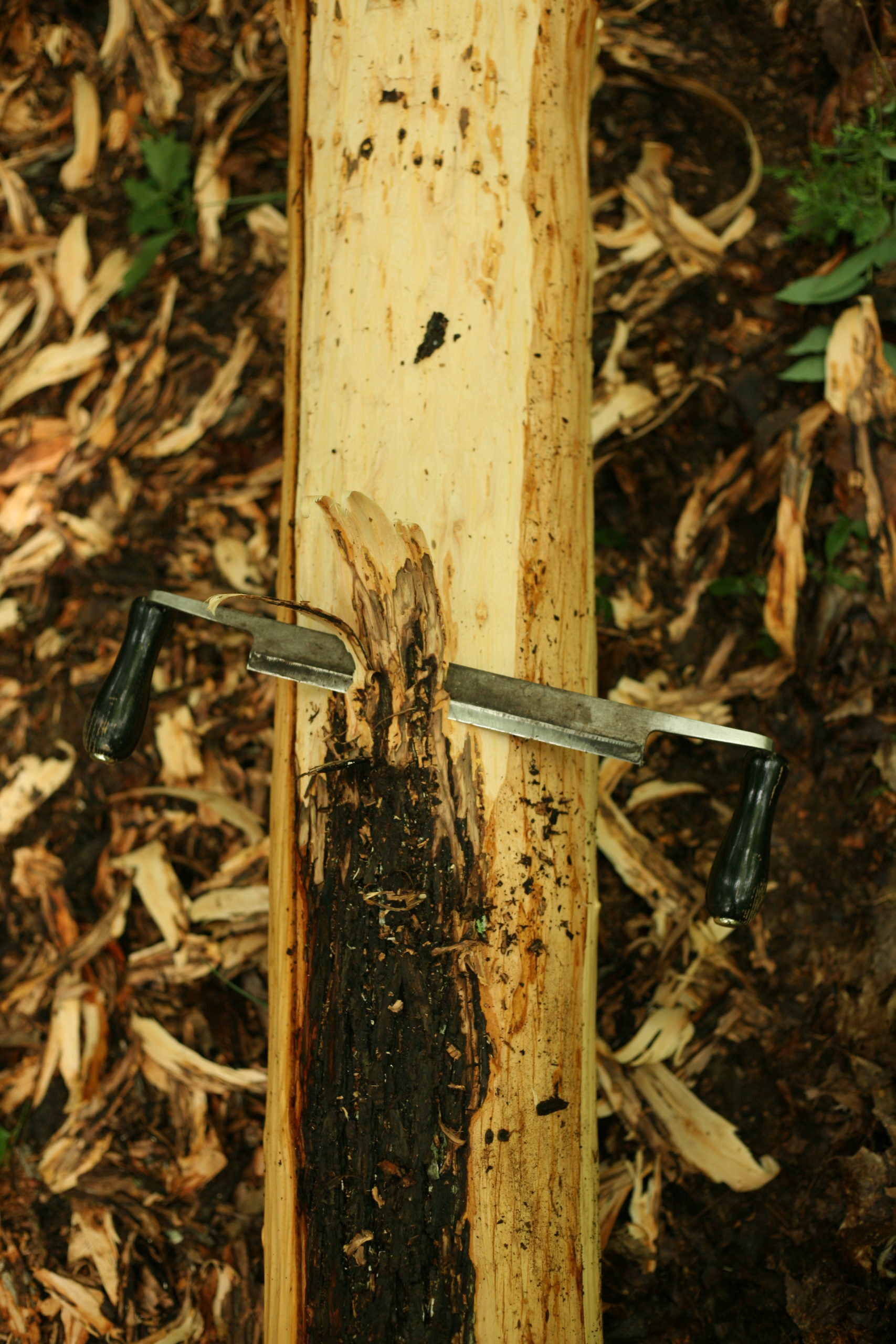
Bark is a traditional material for the woven-bottomed ladderback chairs commonly found within Appalachia. The bark, incredibly tough when dry yet flexible and pliable while still wet, is labor-intensive to collect. A smooth barked tree is felled before the crusty outer bark is shaved with the drawknife to reveal the light-colored inner bark. The inner bark is peeled and stored until use. Attendees will keep the bark they peel.

This is a physical class, community-style class, working beside a fellow craftsperson. We’ll work together to strip the bark and divide the collected coils amongst our group. 

Please bring a water bottle and wear longer pants.  We’ll have cold drinks and sugar snacks on hand for a boost.  

Required Tools: Drawknife. Utility knife. Work gloves. Tape measure

Other supplies: Work clothes.  

All material costs and daily lunches are included in the course fee at Pine Croft.